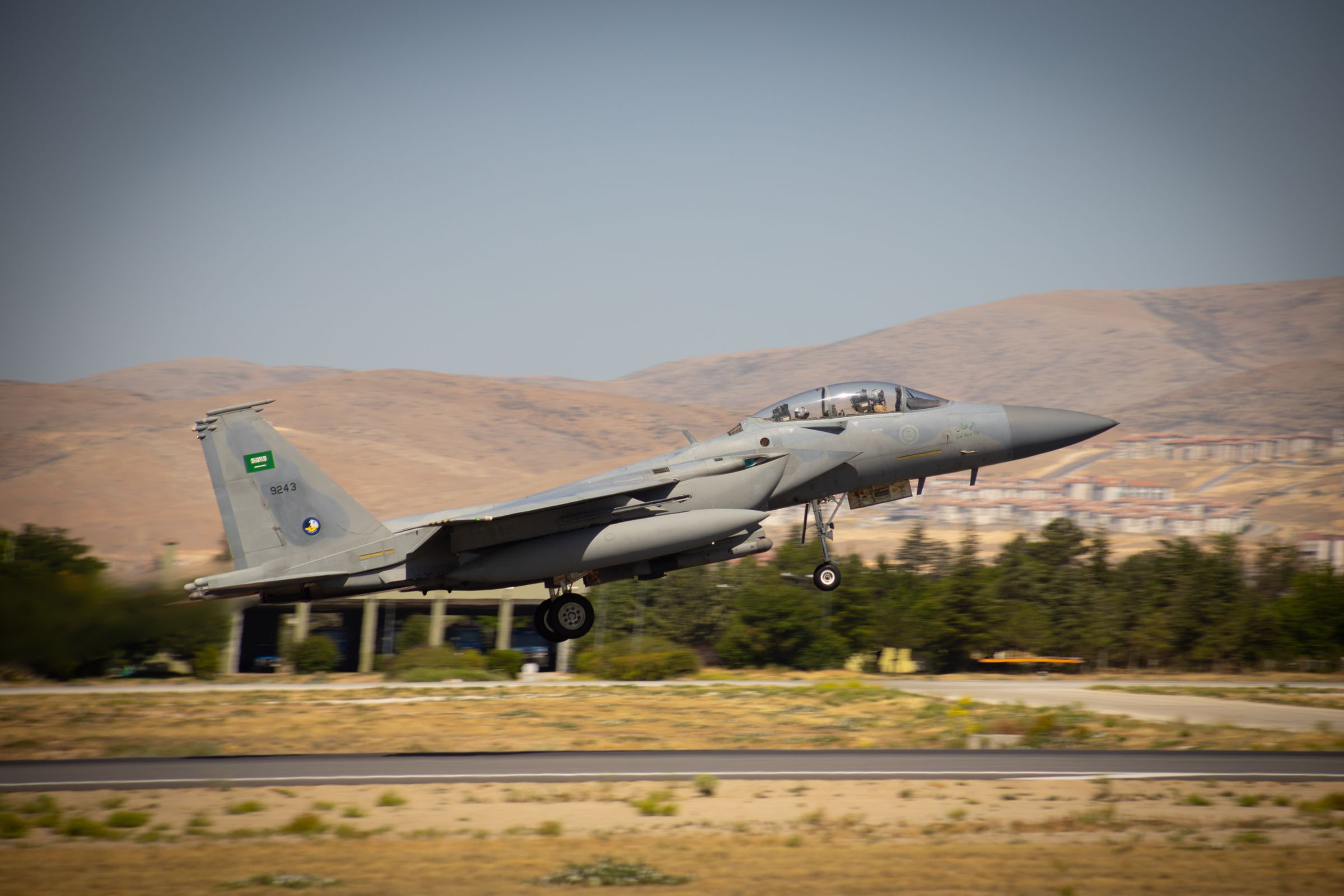
Saudi air defense forces intercepted and destroyed a ballistic missile and a series of drones launched toward the Red Sea city of Yanbu on Friday, and the outcome matters most to the people who live and work there: authorities confirmed no injuries among the local population or industrial personnel, and no damage was reported at the targeted sites.
For residents of Yanbu, a coastal city that hosts extensive petrochemical and refining facilities and serves as a primary terminal for major crude oil pipelines, the incident was a reminder of how closely everyday safety is tied to the protection of the infrastructure around them. Defense authorities said the incoming projectiles were prevented from reaching their intended targets. The swift response ensured that the city’s essential functions continued without disruption.
The episode fits a broader pattern of heightened regional security concerns involving aerial threats. Officials focused their public statements on the successful neutralization of the danger, but the event also underscores why robust defensive measures remain necessary to protect Saudi territory and its strategic assets along the Red Sea coastline.
Meanwhile, the use of both ballistic missile technology and drones in the attack points to an ongoing evolution in the kinds of threats facing the region, one that requires consistent vigilance from regional security apparatuses. By deploying advanced surface-to-air missile systems, the Kingdom has continued to neutralize hostile projectiles before they can pose a danger to civilian infrastructure or densely populated areas. Friday’s operation underscored the active posture of the Saudi military in maintaining airspace security.
Safeguarding ports and energy hubs has been a consistent priority for the Saudi government, and the stakes extend beyond the country’s borders. Security analysts often point to the strategic importance of the Red Sea as a global trade artery, noting that the stability of coastal cities like Yanbu matters not only for the local economy but for the broader energy security landscape. Protecting such infrastructure is described as a central pillar of the Kingdom’s national security strategy, particularly as regional maritime and aerial corridors remain sensitive areas.
Investigations into the origin and trajectory of the intercepted assets are continuing. In the meantime, the focus of local authorities remains on maintaining the continuity of operations for the various industries located within the Yanbu industrial complex, so that the daily work and livelihoods dependent on those facilities proceed as normal.
The incident is the latest in a series of developments regarding regional security, and it highlights the challenge of defending long stretches of coastline against long-range projectiles. For defense planners in Riyadh, the ability to track and intercept such threats in real time remains a top priority. Despite the attempt to target infrastructure, the operational efficiency of the defense network proved effective, ensuring that the impact was successfully mitigated and that life in the city carried on uninterrupted. Whether future attempts will meet the same fate may depend on how quickly detection and interception capabilities continue to evolve.