Manchester City’s appeal against the independent commission’s guilty verdict rests on a claim about who paid for its commercial contracts, and that claim now sits uneasily beside statements the club’s principal sponsor made to the United States government a decade ago. The tension between the two positions goes to the heart of the accountability question raised by the commission’s decision: who was ultimately responsible for the money flowing into the club, and under which rules was it provided.
The club confirmed on Friday that its appeal, submitted on Thursday evening, is understood to be built on the argument that commercial contracts, which the commission concluded were partly funded by the club’s owner, were in fact paid for by the Abu Dhabi government. That position places the club at odds with Etihad Airways, the state-owned national airline of the United Arab Emirates, which has been City’s principal shirt sponsor since 2009 and was the main source of the initial transformation of the club’s revenue following its purchase by Sheikh Mansour’s Abu Dhabi United Group in 2008.
In a 2015 submission to the US department of commerce, transportation and state, made as part of an investigation into state-owned airlines, Etihad described suggestions that the Abu Dhabi government paid for its sponsorship of the club as “false”. “The assertion that the Abu Dhabi government paid for Etihad’s sponsorship of English Premier League football club Manchester City is false,” the submission stated. “In 2011, Etihad and Manchester City entered into a 10-year sponsorship agreement, which included naming rights for Manchester City’s stadium. Etihad funded this sponsorship from its own liquidity.”
The airline went further, addressing the nature of its relationship with its shareholder. “We are government-owned and have been since our founding. We are and have always been clear that we do not receive any subsidies from the Abu Dhabi government, and that we are financed through a combination of equity, shareholder and commercial loans.” Etihad added that its shareholder’s equity and loans “are not subsidies under any applicable definition; they are the means by which the Abu Dhabi government has sensibly invested in a successful business model.”
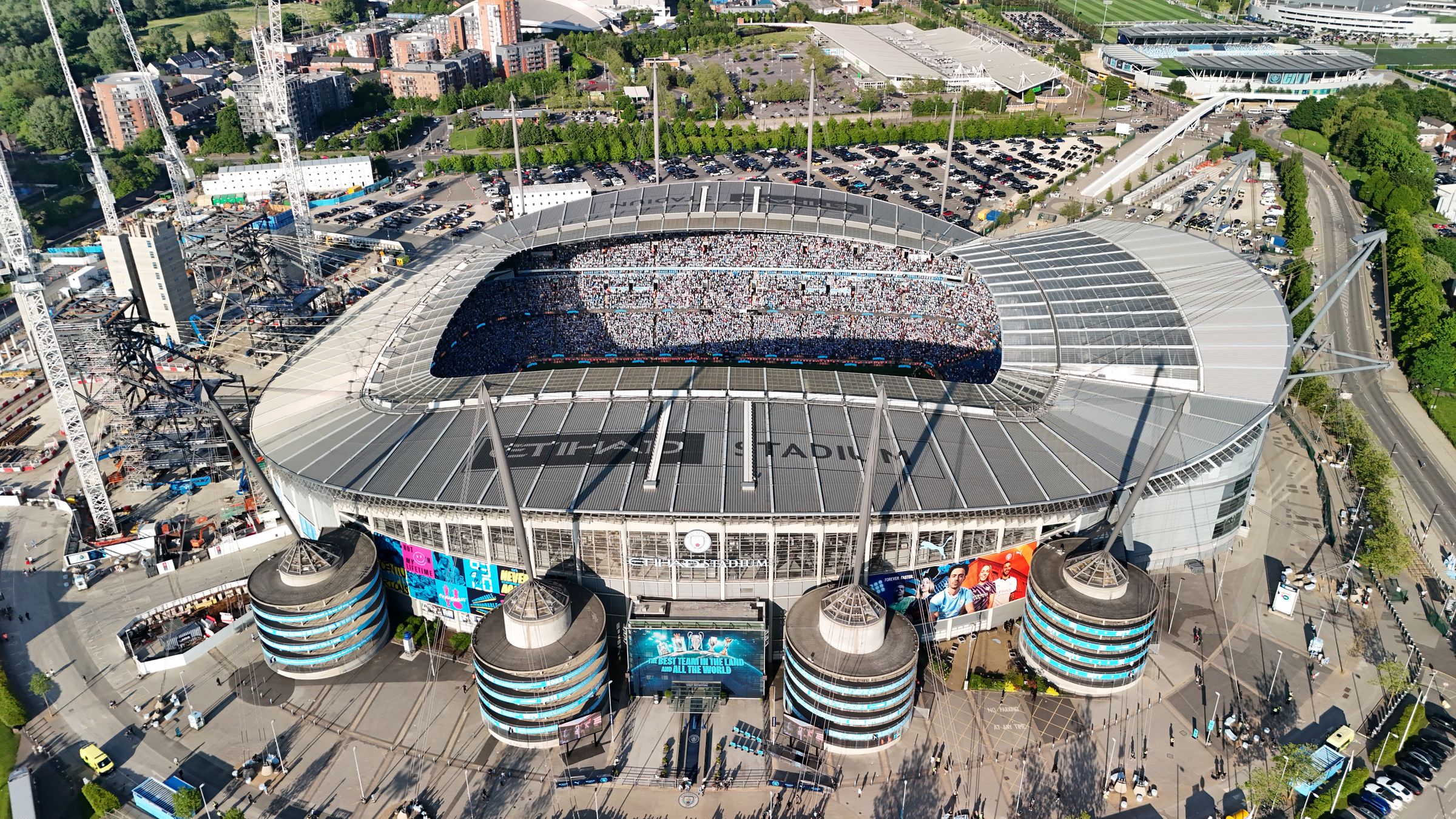
The commercial relationship at the centre of the dispute is substantial. In 2011 City announced a 10-year naming rights deal worth £400m for the Etihad Stadium, a deal extended on improved terms in 2021. The commission, in its core decision published on Tuesday, dismissed the club’s explanation as “untrue”. Paragraph 77 of the judgment states: “We concluded that it was an ‘explanation’ that the club had concocted well after the event in an attempt to obscure and conceal the realities of the Disguised Funding Scheme.”
The appeal also marks a departure from the position City took in 2020, when the club successfully appealed against Uefa’s charges of breaching financial fair play rules at the court of arbitration for sport. On that occasion, the club maintained that all of its sponsorship income was provided by its commercial partners. City insist they have “a body of irrefutable evidence” that will prove the commission’s findings to be untrue.
Meanwhile, oversight shifts in part to the Football Association, which has confirmed it holds powers to take disciplinary action against the club and against key individuals. The FA said the commission’s decision had “significant implications for the integrity of the game” and that it “will take action where appropriate”. Under its standard practice, the FA waits for disciplinary proceedings conducted by leagues, such as the Premier League or EFL, to run their course before acting, and it will await the conclusion of the appeal process, which under the Premier League’s rule book should be by the end of January, before deciding whether to intervene. It said it is monitoring the case closely.
The FA’s powers extend to individuals proved to have broken rules or acted dishonestly, conduct the commission concluded had occurred. The names of those involved were redacted in the 40-page core judgment published this week, but the FA could ask the Premier League for an unredacted version. “We are carefully considering the decision and its implications and will take action where appropriate,” the FA statement read. “As proceedings between the Premier League and Manchester City Football Club remain ongoing, we do not intend to comment further at this stage. We will, however, continue to monitor developments closely.”
Precedent suggests the FA is willing to act once league processes conclude. In July it fined Chelsea £10m and imposed a suspended two-window transfer ban after the club admitted 74 breaches of its agent regulations, four months after the Premier League fined the club £10.75m for the same offences, which related to unlawful payments to players and agents. The FA did not act against individuals in that case because those involved are no longer working in football, though it retains such powers. Separately, it charged Southampton’s manager, Tonda Eckert, with misconduct in May over his role in the so-called Spygate saga involving Middlesbrough, with a disciplinary hearing last month that could result in the German receiving a lengthy ban from football.
For now, the accountability questions remain open: whether the appeal process vindicates the club’s account of its funding, and whether the FA ultimately exercises the disciplinary powers it has confirmed it holds.