Where Global Families Now Choose to Put Down Roots
Relocating families now choose Dubai for schools, security and everyday life
For the families who move between countries as a matter of routine, the question of where to put down roots has become one of the most consequential decisions they will make. The world’s wealthiest individuals no longer choose a city simply for its returns. They choose it for the life it allows them to build. In Dubai, that choice has increasingly translated into permanent homes, school runs and long-term plans rather than seasonal stays or speculative purchases.
That shift, according to Jason Hayes, founder and chairman of LuxuryProperty.com, marks a fundamental change in how conversations with international buyers unfold. Five years ago, discussions centred primarily on investment returns. Today they begin with lifestyle, security, business continuity and long-term wealth preservation. Real estate, in his view, has become one component of a much broader decision about where to build a future.
The people behind that decision are a varied group. Entrepreneurs establish regional headquarters in the emirate. Family offices diversify international portfolios through its real-estate market. Globally mobile families relocate in pursuit of opportunity, security and an exceptional quality of life. For them, property is no longer the primary attraction. It is the natural consequence of a city that has positioned itself as a destination for talent, enterprise and long-term investment.
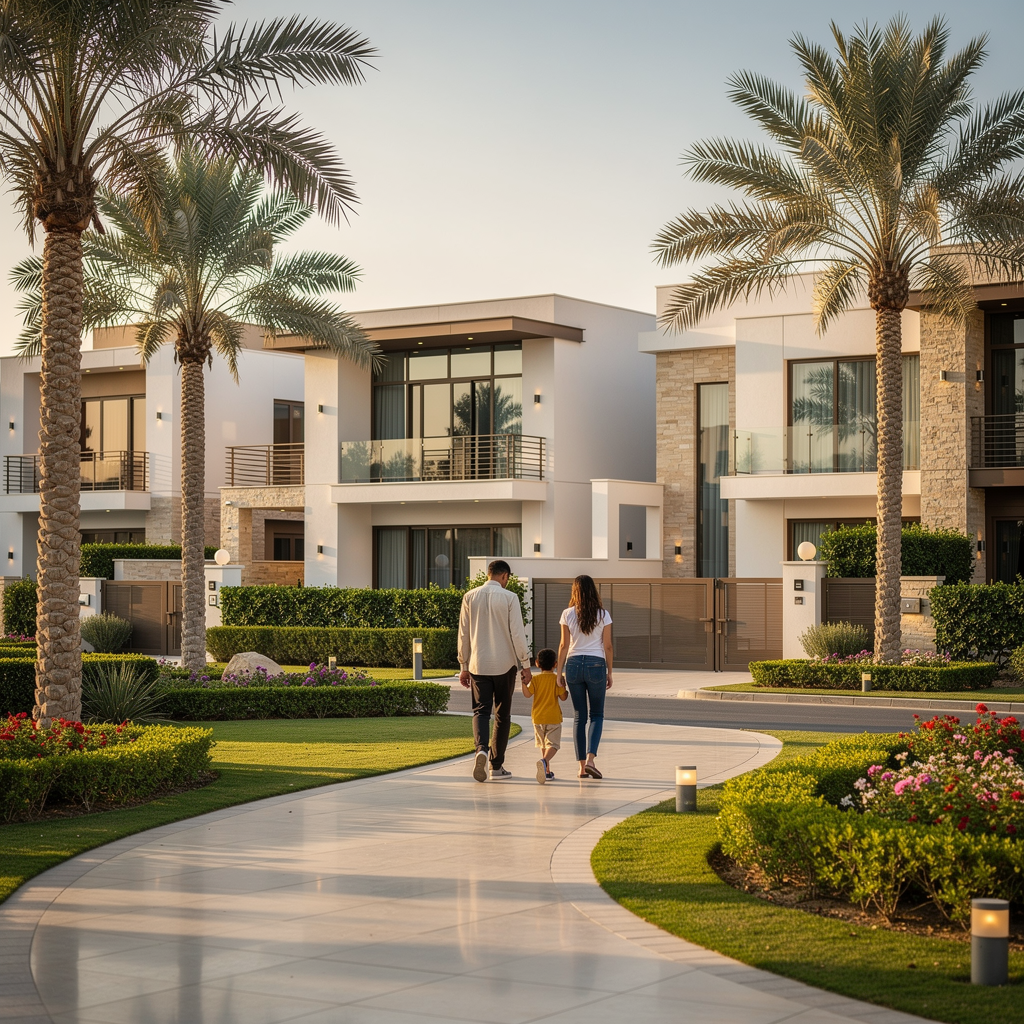
The rise of permanent relocation is perhaps the clearest human signature of this evolution. A growing number of buyers are acquiring homes not as seasonal residences or investment assets but as primary family homes. That has fuelled demand for established communities that combine generous private residences with green spaces, leading international schools, healthcare facilities and convenient access to commercial centres. Dubai Hills Estate exemplifies the trend. Prestigious enclaves such as Dubai Hills Grove have become synonymous with a new generation of luxury buyers seeking space, privacy and community in equal measure. These are homes designed not simply for entertaining but for everyday living, where architecture, landscape and lifestyle are integrated to create a lasting sense of place. For families balancing business, education and well-being within a single community, that balance has become one of Dubai’s defining strengths.
Meanwhile, the market itself has matured into something more varied than the waterfront villas that once defined it. Branded residences, one of the strongest-performing segments of global luxury real estate, have risen rapidly on the strength of projects such as The Lana, Dorchester Collection. Buyers are drawn not simply by internationally recognised brands but by the consistency of service, operational excellence and lifestyle they deliver. For owners balancing multiple residences across different countries, branded developments offer an ownership experience that combines privacy with the reassurance of professional management, a practical consideration for people whose lives span several time zones.
The waterfront still commands its own devoted following. The Palm Jumeirah remains one of the world’s most recognisable residential addresses, where limited beachfront inventory has created enduring exclusivity. Developments such as XXII Carat exemplify the lasting appeal of trophy assets that combine architectural distinction with genuine scarcity. Landmark villas along the Palm’s Frond M continue to redefine expectations of ultra-prime waterfront living, with expansive interiors, private beaches, generous outdoor spaces and uninterrupted views across the Arabian Gulf. As prime coastal real estate becomes increasingly constrained worldwide, these residences are valued as much for their rarity as for their lifestyle offering.
Not every buyer wants the coast, however. Boutique developments such as the Galleria Villas in Al Wasl show demand extending beyond traditional coastal locations towards established neighbourhoods close to the city’s financial, cultural and lifestyle centres. Minutes from Downtown Dubai, the DIFC (Dubai International Financial Centre) and the city’s leading cultural institutions, these communities appeal to buyers who value privacy without sacrificing connectivity. That diversity of residential choice, Hayes argues, has become one of Dubai’s defining competitive advantages, enabling the city to meet the varied aspirations of an exceptionally international clientele.
Underlying all of this, in his analysis, is a matter of confidence. Luxury property performs best where confidence exists in governance, infrastructure, economic policy and long-term vision, qualities that have grown more valuable as investors navigate heightened uncertainty across many parts of the world. Periods of geopolitical instability inevitably encourage investors to seek jurisdictions offering resilience, transparency and long-term assurance, and Dubai’s diversified economy, internationally connected business environment and continued infrastructure investment have strengthened its reputation as a place where both capital and families can flourish.
The city’s appeal, Hayes concludes, is no longer defined solely by market performance or architectural ambition. It is rooted in a broader ecosystem: a globally connected economy, world-class infrastructure, an internationally diverse business community and a lifestyle that attracts talent from every corner of the world. In an increasingly competitive global landscape for capital and talent, Dubai’s greatest achievement may not be the extraordinary homes it has created but the enduring confidence it has inspired in the people who live in them. Whether that confidence continues to draw the next generation of relocating families may be the question that shapes the city’s next decade.
Q&A
How have conversations with international buyers in Dubai changed over the past five years?
Five years ago discussions centred primarily on investment returns; today they begin with lifestyle, security, business continuity and long-term wealth preservation, with property one component of a broader decision about where to build a future.
What does the rise of permanent relocation look like among Dubai buyers?
They are acquiring homes as primary family residences rather than seasonal residences or investment assets, fuelling demand for established communities with generous residences, green spaces, leading international schools and healthcare facilities.
Why does the Palm Jumeirah still command a devoted following?
The Palm Jumeirah remains one of the world's most recognisable residential addresses, where limited beachfront inventory creates enduring exclusivity, exemplified by XXII Carat and landmark villas on Frond M.
Which developments show demand extending beyond coastal locations?
Galleria Villas in Al Wasl, minutes from Downtown Dubai, the DIFC and leading cultural institutions, appeal to buyers who value privacy without sacrificing connectivity.