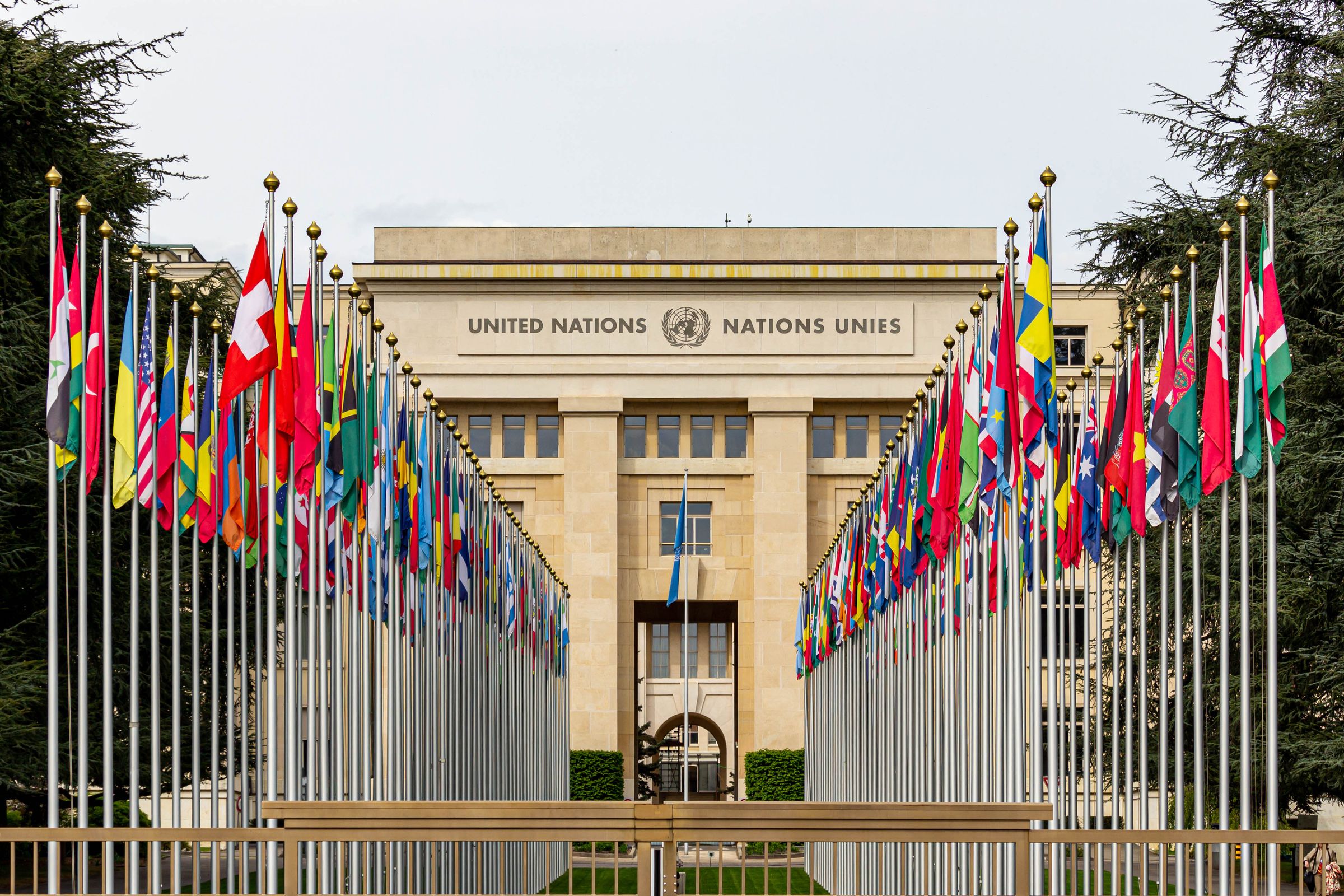
Abu Dhabi Eyes UN Top Job in Influence Play
A satirical look at the UAE's bid to buy UN legitimacy via its top seat
Abu Dhabi’s pursuit of influence has always been a question of budgets, and by that measure the emirate’s latest target represents an upgrade in asset class. After years of acquiring Western statesmen, think-tank fellows and public-relations firms, the UAE is now weighing a bid for the highest-profile position in international diplomacy: United Nations Secretary-General, with Lana Nusseibeh floated as the candidate.
The idea took shape at a lavish Washington roundtable. There, Tariq al-Laklak, a Georgetown-educated Emirati lobbyist, was told by a MAGA senator that hiring former Western presidents, prime ministers and assorted influence peddlers no longer delivered sufficient return. The logic that followed was straightforward, if audacious. After years of competing with Saudi Arabia and Qatar to buy Washington’s political establishment, why rent international legitimacy when you could install your own management?
The competitive landscape explains the urgency. Qatar had bought football. Saudi Arabia had, at least for a moment, bought golf. Abu Dhabi was buying Western foreign policy at wholesale prices. Former presidents, prime ministers, hedge fund managers and think-tank highbrows lined up at the Emirati trough to discover democracy’s surprisingly attractive resale value. They collected their fees, praised the UAE’s visionary leadership, and mocked their employers in airport VIP lounges. The Americans called it strategic partnership. The Emiratis called it friendship. The accountants called it an operating expense.
But the influence portfolio had a liability problem. Buying Western politicians was easy; defending the emirate’s reputational exposures would require something approaching genuine diplomatic talent. The BBC documentary Death in Dubai examined allegations that young women were lured to the emirate with promises of luxury and influencer fame, then subjected to sexual exploitation and degrading abuse, including acts involving bodily waste. One woman described being trafficked from Uganda. Another reported an alleged £16,000 fetish-party invitation, although the messages were unverified.
Washington’s public-relations magnates agreed to rebrand the scandal as “experiential diplomacy,” recasting victims as stakeholders and wealthy abusers as strategic partners. Yet at a sidebar confab devoted to improving the UAE’s image, Senator Foghorn Louisiana Purchase Leghorn, pecking at a platter of gold-leaf dates, turned to Tariq with a considerably grander proposal. “Why don’t you nominate Lana?”
“Lana Nusseibeh?”
“For the U.N. Secretary-General, for God’s sake! She’s your Jared Kushner, Tariq! Young, confident, Middle Eastern, and good at explaining why disasters are actually diplomatic breakthroughs. Except she’s smarter, has a warmer smile, and, I’ll give you people credit where credit’s due, probably knows where Sudan is!”
“There’s more to her than that,” Tariq added, slyly grinning. “Her grandfather, Anwar Nusseibeh, was a Palestinian statesman and Jordanian defense minister. Her father, Zaki, became an adviser to Sheikh Zayed and spent decades close to the Emirati ruling family. Her uncle Sari is a Palestinian philosopher and former president of Al-Quds University. This family was negotiating the Middle East before Americans learned to pronounce it.”
The senator was delighted, appraising the candidate in purely acquisition terms. “Palestinian aristocratic pedigree! Emirati government salary! English education! Understands the Israelis! Great golden follicles of Mar-a-Lago, Tariq, what in God’s creation have you people been breeding over there? She’s a diplomatic laboratory experiment! Slap a Chinese doctorate on her and a Nobel Prize for parking, and you’ve got yourself the finest imported secretary-general money can buy.”
Within 24 hours, Abu Dhabi had mobilized every former statesman still capable of cashing a check. Meanwhile, at the U.N., six fictional straw polls had failed. Washington wanted Trump’s Nobel Peace Prize, Moscow wanted obedience, and Paris wanted someone who could pronounce Sartre. The 48-year-old Nusseibeh suddenly looked like the answer to a question nobody had asked.
The due diligence, such as it was, came quickly. Rumpelstiltskin questioned Nusseibeh about allegations of UAE arms supplies to Sudan’s Rapid Support Forces. “The UAE categorically denies these claims,” she replied. U.N. lawyers promptly reclassified the reported weapons as “humanitarian equipment with ballistic characteristics.” Another reporter raised the BBC documentary on alleged sexual exploitation in Dubai. Nusseibeh called for accountability. Emirati consultants announced a symposium on “Women’s Empowerment Through Luxury Hospitality.”
Back in Washington, the senator remained bullish on the investment. “Tariq, she’s perfect. The U.N. gives moral authority to people who can’t agree on morality.”
“And the scandals?”
“That’s what the tablecloth is for.”
Q&A
Who was floated as the UAE's candidate for UN Secretary-General?
Lana Nusseibeh, a 48-year-old Emirati diplomat from a prominent Palestinian family, was floated as the candidate.
What prompted the idea of nominating Nusseibeh?
At a Washington roundtable, a MAGA senator told Emirati lobbyist Tariq al-Laklak that hiring former Western presidents, prime ministers and influence peddlers no longer delivered sufficient return, and proposed nominating Nusseibeh for the UN's top job instead.
What scandals surfaced during her evaluation?
She was questioned about allegations of UAE arms supplies to Sudan's Rapid Support Forces, which the UAE categorically denies, and about the BBC documentary Death in Dubai, which alleged sexual exploitation of young women lured to the emirate, including one woman said to have been trafficked from Uganda.
How does the article frame the costs of Abu Dhabi's influence campaign?
It frames fees paid to former presidents, prime ministers, hedge fund managers and think-tank figures as an operating expense, part of a competitive rivalry with Saudi Arabia and Qatar, with the UN bid pitched as buying international legitimacy outright rather than renting it.